

Top 5 Robotic Depalletizing Systems in Canada for 2026
Robotic depalletizing systems are robotic cells designed to unload products from incoming pallets, handling mixed SKUs and variable orientations using adaptive grippers and vision guidance. In Canada these systems are increasingly adopted across food and beverage, cold storage, cannabis, pharmaceutical, e-commerce and third-party logistics operations because they reduce manual labor, improve line uptime, and enable gentle handling for fragile items. Canadian buyers favor flexible, vision-guided cells that handle seasonal demand swings, work reliably in cold environments, support bilingual labeling and compliance requirements, and integrate with existing conveyors and warehouse management systems. Cost pressures, persistent labor shortages, and stronger expectations for throughput and product protection make depalletizing robots an appealing investment for manufacturers and distributors focused on uptime, safety, and predictable return on investment.
Inception's AI took the time to understand this market in Canada · · How we pickWe may earn a commission on purchases. It never affects our rankings.
Top Picks Summary
FANUC M-410iC Robotic Depalletizer
The FANUC M-410iC is positioned as a best-in-class depalletizing robot thanks to its industry-leading cycle times, smooth high-speed Cartesian-style motion, and proven reliability in high-throughput lines. Compared with ABB and KUKA alternatives in this list it typically delivers higher throughput per cell and lower lifetime maintenance costs, while offering a more compact, cost-effective footprint than turnkey integrator solutions such as Honeywell Intelligrated. For operations prioritizing raw speed and low total cost of ownership in continuous depalletizing duty, the M-410iC is a strong technical and financial choice.

Estimated$130,000 – $300,000
ABB IRB 660 Palletizing Robot
The ABB IRB 660 stands out for its energy-efficient motion, flexible payload options and powerful offline programming tools that reduce integration time and engineering expense. Against the faster FANUC M-410iC and the heavy-duty KUKA systems it trades top-line cycle speed for reduced energy consumption and faster commissioning using ABB’s simulation and programming ecosystem, which cuts upfront integration risk. For users who value lower deployment cost and repeatable programming workflows across sites, the IRB 660 offers a balanced, cost-conscious depalletizing solution.

KUKA KR QUANTEC PA Depalletizing System
The KUKA KR QUANTEC PA differentiates itself through exceptional reach and payload combinations and modular end-of-arm tooling options that simplify handling diverse pallet patterns and product geometries. Compared with FANUC and ABB units it often reduces the number of robots required per cell—lowering capital expenditures—while delivering strong flexibility for mixed SKU lines; however, turnkey integrators such as Honeywell may still provide faster single-source deployment. KUKA’s strength is a technically versatile, scalable depalletizing platform that reduces installed hardware cost for complex or heavy-duty applications.

Estimated$160,000 – $350,000
Honeywell Intelligrated Robotic Depalletizer
Honeywell Intelligrated offers turnkey depalletizing systems that combine robots, conveyors, controls, and software into a single-delivery solution that minimizes project management burden and commissioning risk. Unlike the OEM robots from FANUC, ABB, KUKA, and Yaskawa which excel at raw robot performance, the Intelligrated approach saves operational and integration costs by providing validated system-level warranties, site integration expertise, and WMS/automation software tie-ins. For distribution centers and OEM customers seeking rapid deployment and predictable total project cost, the Honeywell solution is the market-leader choice for system-level value.
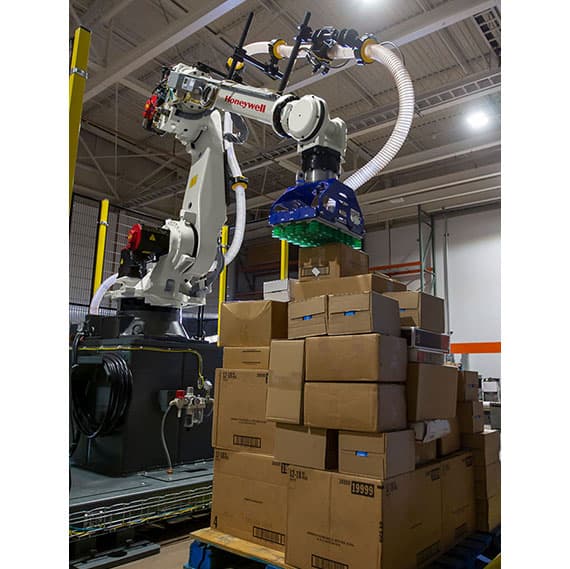
Estimated$250,000 – $700,000
Yaskawa Motoman MPL800 II Palletizing Robot
The Yaskawa Motoman MPL800 II is recognized for heavy-duty depalletizing and palletizing tasks where high payload capacity and rugged duty cycles are required, delivering strong durability and competitive capital pricing. Compared with high-speed models like the FANUC M-410iC it prioritizes load handling and robustness over peak cycle rates, and versus KUKA it often provides a more cost-competitive option for very heavy loads; integration-focused buyers should weigh the higher turnkey convenience of Honeywell against the MPL800 II’s lower equipment cost. For facilities handling heavy skids or large items, Yaskawa’s balance of payload capability and price makes it a market leader for heavy-duty depalletizing.
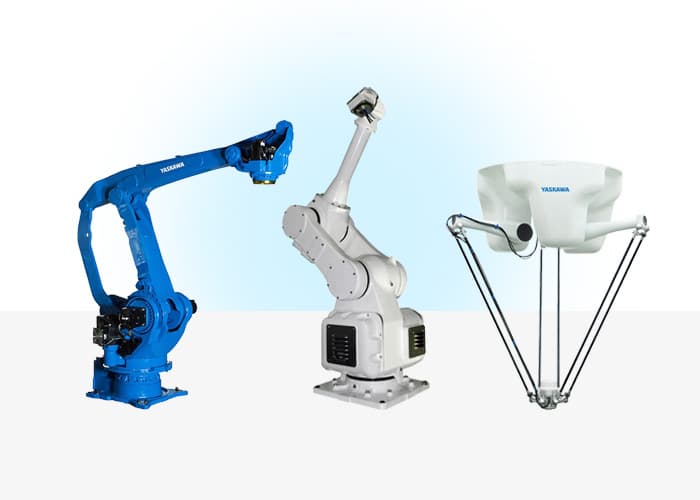
Estimated$120,000 – $280,000
What research and industry data say about robotic depalletizing
Industry studies and operational case reports consistently show that modern robotic depalletizing solutions produce measurable benefits in throughput, safety and product protection when properly specified and integrated. Research and field data highlight the advantages of vision-guided picks, adaptive grippers, and flexible cell design: vision systems increase pick reliability across mixed-SKU pallets, adaptive end-of-arm tooling reduces product damage for fragile items, and integrated controls simplify changeovers. Adoption in Canada has accelerated where labor costs, regulatory safety standards and high SKU variability create a strong business case for automation.
Operational case studies often report payback times in a practical range of 12 to 36 months depending on throughput, labor rates and integration scope.
Vision-guided depalletizing reduces mispick rates and downtime for mixed-SKU pallets compared with fixed-tool systems, improving overall equipment effectiveness.
Adaptive grippers and soft-hand tooling significantly reduce product damage for packaged and fragile items compared with manual unloading.
Automation reduces repetitive-strain injuries and improves workplace safety metrics, aligning with Canadian occupational health and safety priorities.
Turnkey robotic cells that include conveyors, safety guarding and controls lower integration risk and support faster commissioning.
Energy-efficient robotic designs and optimized cycle management help reduce operating energy per handled unit, supporting sustainability goals.
Frequently Asked Questions
Which depalletizing system should I buy for heavy cases?
If you’re moving heavy-case loads, the FANUC M-410iC Robotic Depalletizer is a strong pick because it’s a 410 kg class payload unit with long reach designed specifically for heavy-case depalletizing, and it averages a 4.7 rating.
What exact payload spec does the FANUC M-410iC offer?
The FANUC M-410iC Robotic Depalletizer is built for a 410 kg class payload, with long reach for heavy-case depalletizing; it holds an average rating of 4.7.
How does value compare between ABB IRB 660 and FANUC M-410iC?
The provided data doesn’t list prices for either the ABB IRB 660 Palletizing Robot or the FANUC M-410iC Robotic Depalletizer, so I can’t compare value by cost; ratings are 4.7 (ABB) vs 4.7 (FANUC).
Are the ABB IRB 660 and KUKA KR QUANTEC PA good for varied cases?
Yes for varied case handling: the ABB IRB 660 supports common pallet patterns and integrates with third-party grippers and controls (4.6 rating), and the KUKA KR QUANTEC PA uses modular end-of-arm tooling options with vision/conveyors/grippers integration (4.5 rating).
Conclusion
In the Canadian market for 2026 the top depalletizing options highlight a mix of specialist robots and turnkey systems: FANUC M-410iC Robotic Depalletizer, ABB IRB 660 Palletizing Robot, KUKA KR QUANTEC PA Depalletizing System, Honeywell Intelligrated Robotic Depalletizer, and Yaskawa Motoman MPL800 II Palletizing Robot. Each option suits different priorities: the ABB IRB 660 and KUKA KR QUANTEC PA are strong for flexible, high-speed operations, Honeywell Intelligrated delivers integrated turnkey solutions for complex lines, and the Yaskawa MPL800 II provides reliable palletizing performance. The FANUC M-410iC Robotic Depalletizer stands out as the best choice for high-throughput mixed-SKU depalletizing with proven performance and wide integration support. I hope you found what you were looking for; you can refine or expand your search using the site search or contact local system integrators for tailored quotes and site assessments.