

Vision Guided Robotic End of Line Cells: Top 5 in Canada for 2026
Vision guided robotic end of line cells combine 2D and 3D machine vision with industrial robots to identify part orientation, read codes, guide picks, and verify quality for mixed SKU handling. In Canada, these cells are increasingly attractive to manufacturers in food and beverage, consumer goods, e-commerce fulfilment, and automotive supply because they reduce manual handling, speed changeovers, and lower tooling and fixturing costs. Buyers prefer vision guided solutions that support dynamic reconfiguration on the fly, simplify mixed SKU runs, and deliver traceability through code reading and automated inspection. Practical benefits for Canadian operations include faster time to market, better use of limited skilled labor, bilingual local support, and easier compliance with industry and sanitary standards. As automation budgets prioritize return on investment and flexibility, vision guided end of line cells are a top choice for companies looking to scale operations, reduce errors, and future proof packing and palletizing processes.
Inception's AI took the time to understand this market in Canada · · How we pickWe may earn a commission on purchases. It never affects our rankings.
Top Picks Summary
FANUC M-10iD with iRVision
The FANUC M-10iD with iRVision is positioned as a market-leading solution for high-throughput, vision guided robotic end-of-line cells thanks to its high payload-to-speed ratio, industrial robustness and a global service network. Compared with the other products in this list it delivers the highest sustained throughput and lowest downtime risk for heavy-duty lines, trading a higher initial CAPEX for lower lifecycle cost and superior performance on large-volume, high-mix packaging tasks.
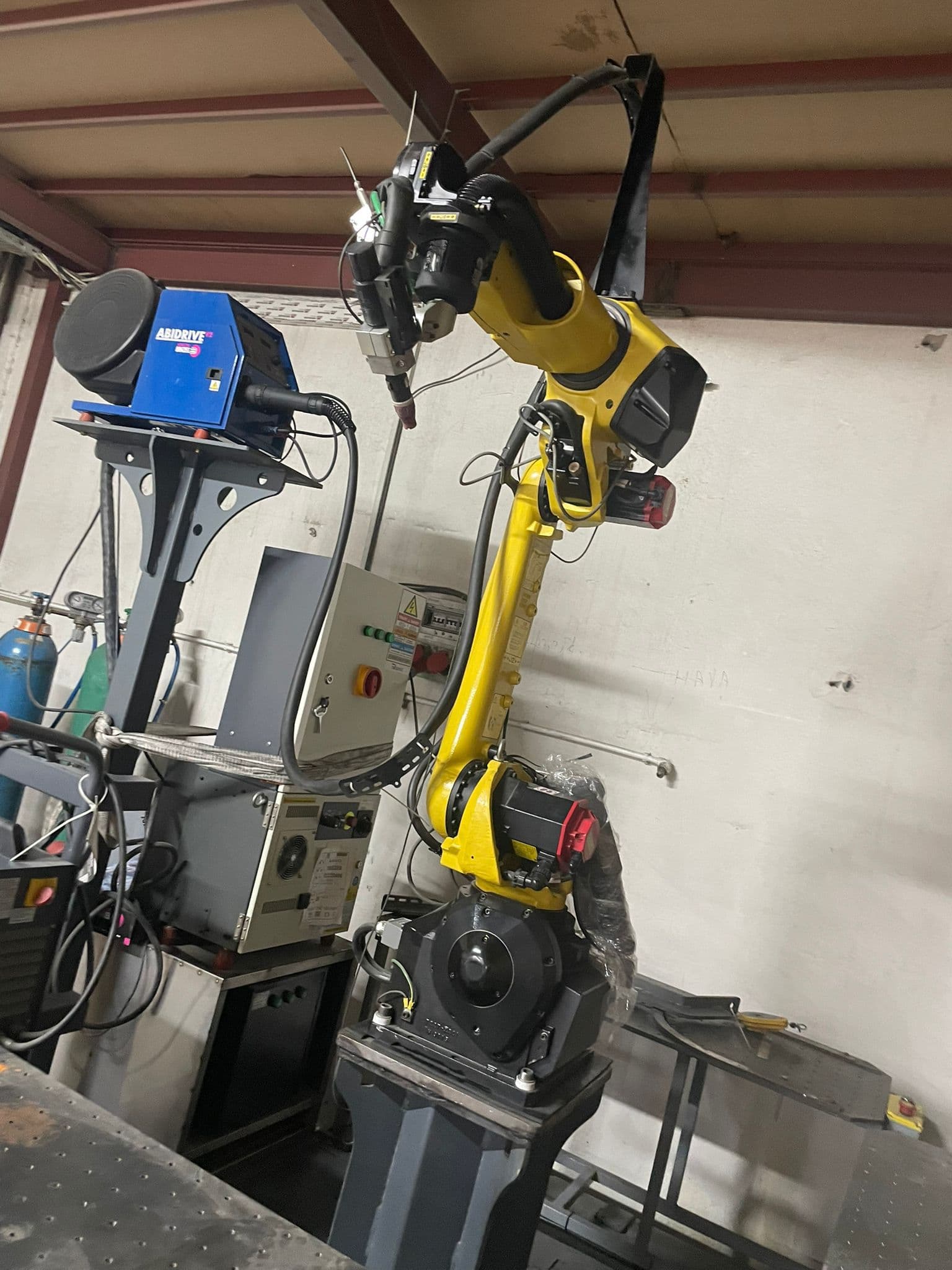
Estimated$80,000 – $150,000
ABB FlexPicker IRB 360 with Integrated Vision
The ABB FlexPicker IRB 360 with Integrated Vision is best-in-class for ultra-high-speed pick-and-place end-of-line cells, offering extremely short cycle times and a compact footprint ideal for lightweight, high-volume SKU handling. Versus articulated arms and collaborative robots it is the most cost-effective per pick for pure speed applications, though it is less flexible for heavy payloads or human-collaborative layouts and typically dedicated to straight-through sorting and packaging lanes.

KUKA KR CYBERTECH with KUKA.VisionTech
The KUKA KR CYBERTECH with KUKA.VisionTech is a flexible, precision-focused articulated arm package tailored for vision guided end-of-line cells that require reach, repeatability and smooth integration into mixed-SKU lines. It sits between the high-speed delta pickers and the lightweight cobots by delivering greater reach and payload flexibility than ABB FlexPicker and faster cycle robustness than typical cobots, offering a balanced CAPEX profile for manufacturers needing adaptable, multi-task end-of-line automation.

Universal Robots UR10e with Cognex VGR
The Universal Robots UR10e paired with Cognex VGR is a leading collaborative vision-guided solution for end-of-line cells focused on rapid deployment, ease of programming and low integration cost, enabling quick ROI for small-to-medium production runs. Compared with industrial arms like FANUC or KUKA it sacrifices top-end throughput and heavy payload capacity but outperforms them on flexibility, tool-changeability and reduced system-level costs when safety-rated human collaboration and frequent changeovers are priorities.

Estimated$60,000 – $120,000
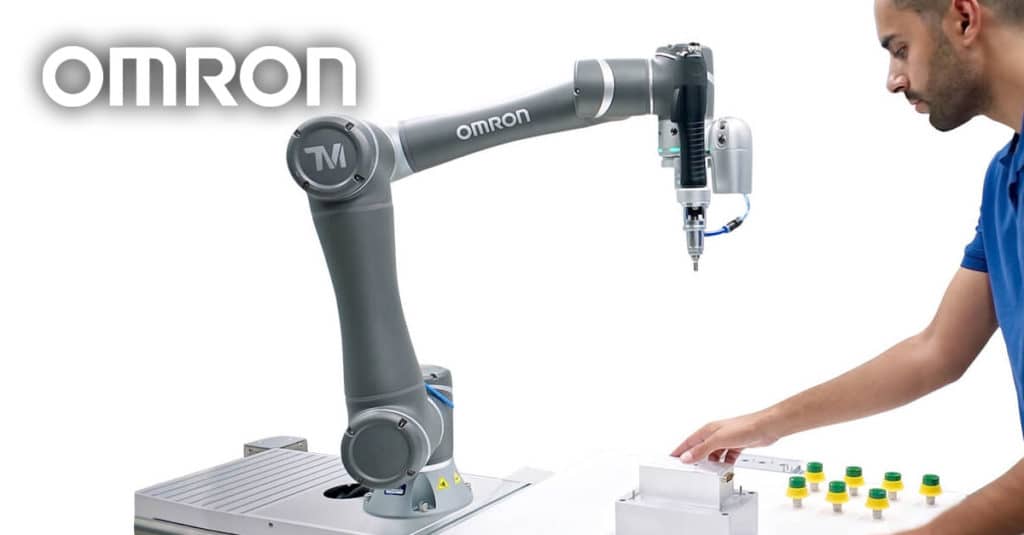
Omron TM Series Collaborative Robot with Integrated Vision
The Omron TM Series collaborative robot with integrated vision is best-in-class for compact, turnkey vision guided end-of-line cells where minimal integration effort and footprint are critical; the built-in vision stack reduces component count and shortens commissioning time. When compared to external-vision pairings like UR+Cognex or heavyweight arms, Omron’s integrated approach lowers initial system cost and simplifies upgrades, though it is not targeted at the highest-speed, high-payload pick-and-place scenarios dominated by delta and large industrial robots.
Research and Evidence Behind Vision Guided Robotics
A growing body of research and industry studies validates the operational benefits of vision guided robotics. Academic and government labs, along with industry integrators, report measurable improvements in pick accuracy, throughput, and inspection reliability when 2D and 3D vision are applied to end of line tasks. Research emphasizes how modern vision systems, combined with machine learning and barcode reading, improve traceability and reduce human error. Canadian research institutions and national labs have examined how automated vision systems help small and medium manufacturers modernize with lower capital overhead and predictable payback periods.
Improved accuracy: Studies show vision guided pick rates and inspection accuracy significantly reduce mispicks and missed defects compared with manual handling.
Throughput gains: 2D/3D vision enables faster part localization and dynamic gripping, increasing cycle rates for mixed SKU lines.
Reduced tooling: Vision guidance lowers the need for custom fixtures and complex end effectors, shortening changeover time.
Better traceability: Integrated code reading and inspection provide automated lot and serial tracking for compliance and recalls.
Predictable ROI: Case studies from manufacturing sectors indicate reduced labor costs and fewer rejects, often producing payback in months to a few years depending on volume.
Scalable adoption: Research highlights modular, vision-guided cells as practical for Canadian SMEs because they can be deployed incrementally and reconfigured remotely.
Frequently Asked Questions
Which robotic vision end-of-line cell fits mixed-SKU packaging best?
Choose the FANUC M-10iD with iRVision for mixed-SKU end-of-line work needing accurate part location and robot guidance, since it pairs a 10 kg payload 6-axis robot with an integrated iRVision system rated 4.6.
What exact vision and picking capability does FANUC M-10iD include?
The FANUC M-10iD with iRVision includes an integrated iRVision system for accurate part location, robot guidance, and bin picking, using 10 kg payload with high-speed 6-axis motion.
How does ABB FlexPicker IRB 360 value compare on price?
No Canadian price is provided for the ABB FlexPicker IRB 360 with Integrated Vision, so I can’t compare value by cost; what is specified is a delta-style picker for very high cycle rates and an average rating of 4.5.
What warranty duration comes with KUKA KR CYBERTECH?
No warranty duration is provided for the KUKA KR CYBERTECH with KUKA.VisionTech, but it does specify 2D/3D vision for precise pick, place, and quality inspection and an average rating of 4.5.
Conclusion
In Canada, vision guided robotic end of line cells are a practical way to increase flexibility, reduce tooling, and support dynamic reconfiguration for mixed SKU operations. The top options covered on this page are FANUC M-10iD with iRVision, ABB FlexPicker IRB 360 with Integrated Vision, KUKA KR CYBERTECH with KUKA.VisionTech, Universal Robots UR10e with Cognex VGR, and Omron TM Series Collaborative Robot with Integrated Vision. For many Canadian applications the FANUC M-10iD with iRVision stands out as the best overall choice because of its balance of speed, vision accuracy, and broad integrator support across the country. We hope you found what you were looking for; you can refine or expand your search using the site search to compare specifications, integrators, and local support options.