

Top 5 Ion Exchange Columns for Protein and Peptide Purification in Canada — 2026
Published on Saturday, January 24, 2026
Ion exchange columns for protein and peptide purification are designed for high resolution separations, low nonspecific binding, and biocompatible chemistries that preserve biological activity. These columns support both native and denaturing conditions and are available in scalable formats from analytical to preparative sizes, making them suitable for academic labs, contract research organizations, and biopharma development in Canada. Canadian researchers and process teams favor columns that deliver consistent dynamic binding capacity, fast mass transfer for reduced cycle time, robust cleaning and regeneration, and reliable supplier support and documentation. Increasing demand for biologics, peptide therapeutics, and tight timelines in Canadian life science clusters has driven preference for columns with clear scale-up pathways, validated performance data, and local availability or distribution.
Top Picks Summary
Cytiva HiTrap Q HP
Cytiva HiTrap Q HP is a prepacked, high-capacity strong anion-exchange column designed for convenient protein and peptide purification screening and small-scale production. Its balance of binding capacity, reproducible factory packing and off-the-shelf availability make it a cost-effective choice for method development compared with higher-resolution but pricier analytical columns like Mono Q. Financially it’s attractive for labs running many routine purifications due to lower per-run cost and broad compatibility with common FPLC systems.
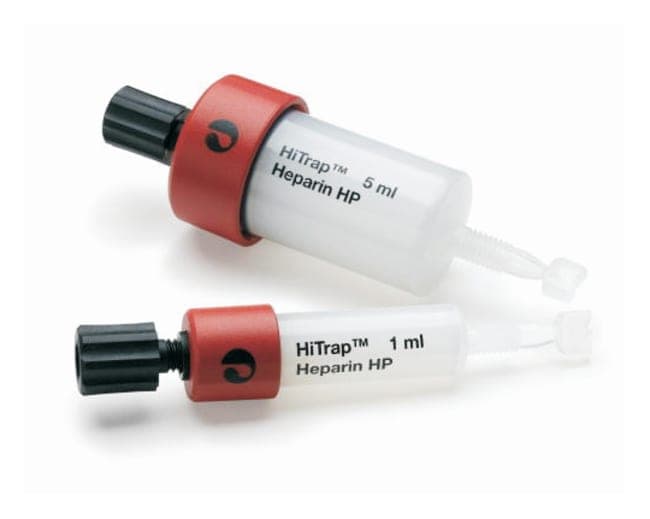
Where to buy Cytiva HiTrap Q HP in Canada: the trusted retailers we track in this market, with the best price we have observed at each. Prices are checked regularly and can change, and the retailer confirms the final price at checkout.
We may earn a commission on purchases. It never affects our rankings.
$250 – $450
Bio-Rad UNO Q
Bio-Rad UNO Q is a prepacked strong anion-exchange column optimized for rapid, high-throughput purifications with robust dynamic binding characteristics. It targets labs that prioritize throughput and simplicity — typically priced competitively versus HiTrap and POROS options — and is well suited for routine protein capture where ultra-high resolution is not required. Technically it competes by offering straightforward handling and low backpressure, making it an economical workhorse for daily operations.

Cytiva Mono Q 5/50 GL
Cytiva Mono Q 5/50 GL is a high-resolution strong anion-exchange analytical column engineered to separate closely related protein and peptide species during method development and final polishing. Its superior resolving power and peak capacity exceed those of HiTrap and UNO formats, albeit at a higher initial cost, so it is chosen when separation quality and characterization precision outweigh per-run expense. For labs focused on distinguishing isoforms, charge variants or fine peptide differences, Mono Q provides the technical advantage needed for rigorous analyses.
Thermo Scientific POROS XQ
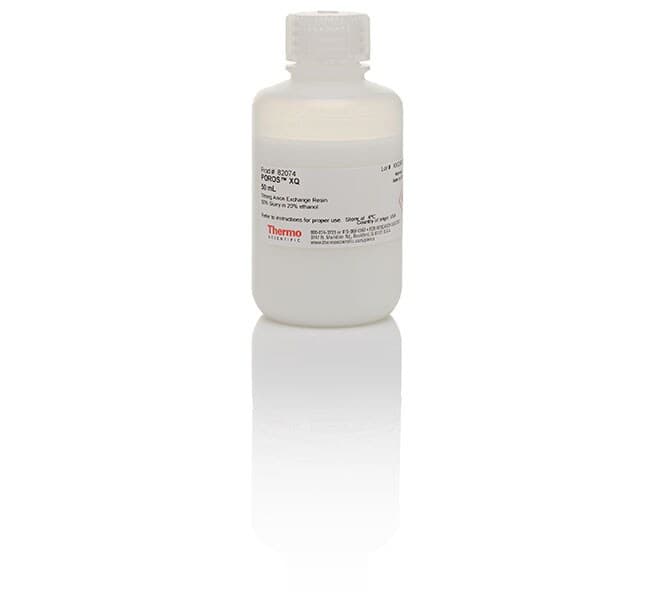
Thermo Scientific POROS XQ is a rigid, high-flow strong anion-exchange resin designed for fast processing and seamless scale-up from laboratory to process scale, reducing cycle times for protein and peptide purifications. POROS XQ’s technical edge is its ability to operate at high linear velocities with mechanical stability, which shortens run times and lowers operating costs for large-volume workflows compared with bead-based, high-resolution columns like Mono Q. Economically, POROS becomes attractive when time savings and throughput drive down overall cost per purified milligram.
Tosoh TSKgel DEAE-5PW
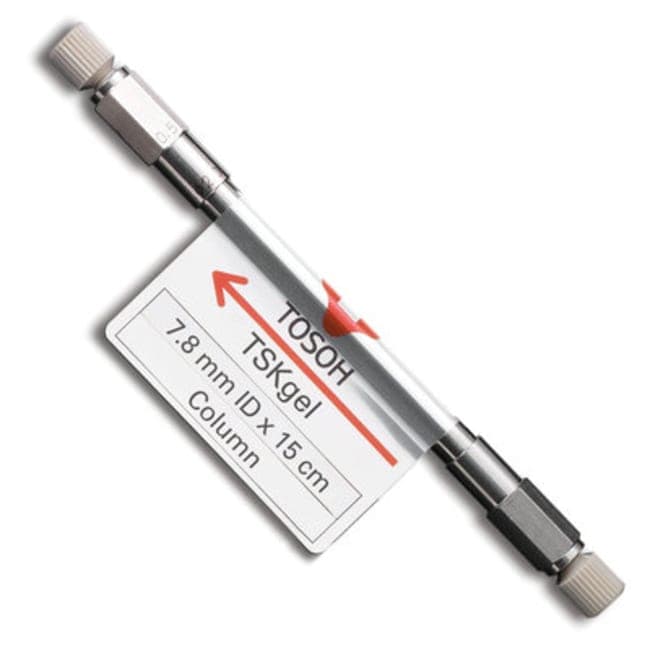
Tosoh TSKgel DEAE-5PW is an analytical-grade anion-exchange column designed for fine peptide and small protein separations with excellent peak shape and reproducibility at HPLC scale. It is particularly favored in peptide work for its chromatographic selectivity and consistent performance, though per-column cost can be higher than general-purpose HiTrap or UNO formats; it is selected when analytical performance and reproducibility justify the premium. Compared with POROS and Mono Q, TSKgel DEAE-5PW is more oriented to high-resolution analytical separations rather than high-flow preparative processing.
Why Ion Exchange Works and What Research Shows
Ion exchange chromatography separates proteins and peptides based on charge interactions between the analyte and charged ligands on the resin. Scientific studies and method comparisons have repeatedly shown that well-optimized ion exchange resins provide high selectivity, strong resolution of charge variants, and reproducible recovery when buffers, pH, and conductivity are controlled. Research into resin particle morphology, pore structure, and ligand density demonstrates trade offs between capacity and mass transfer that influence resolution and processing speed. For beginners, the key takeaways are that choosing the correct exchanger type, running appropriate equilibration and elution gradients, and validating dynamic binding capacity at working conditions are the most important steps to reliable purification outcomes.
Strong anion exchangers (Q, XQ) are effective for binding negatively charged proteins at pH values above the protein isoelectric point, delivering high resolution for charge variants.
Weak anion exchangers (DEAE) can be gentler near neutral pH and are useful when milder elution conditions are preferred.
Research comparing porous particle resins to high flow, rigid-base resins shows that POROS-style materials offer faster mass transfer and higher throughput for preparative work, while shallow-bed analytical columns like Mono Q deliver peak resolution for characterization.
Studies on dynamic binding capacity emphasize testing at operational flow rates and sample loads to predict scale-up performance and minimize breakthrough.
Low nonspecific binding and biocompatible chemistries reduce product loss and avoid adverse interactions that complicate downstream analytics, including mass spectrometry.
Multiple publications and application notes validate common workflows: pH and salt gradient elution, step elution for impurity removal, and inline polishing after capture steps.
Frequently Asked Questions
Which column should I choose for protein screening?
Choose Cytiva HiTrap Q HP for convenient protein and peptide purification screening and small-scale production, since it’s a prepacked strong anion-exchange (Q) format with average rating 4.5.
What does Cytiva Mono Q 5/50 GL improve during method development?
Cytiva Mono Q 5/50 GL is engineered for high-resolution strong anion-exchange separations, with features for sharp, high-efficiency protein/peptide resolution and low band-broadening for excellent peak capacity (rating 4.7).
Is Bio-Rad UNO Q cheaper than Cytiva HiTrap Q HP?
The provided data says Bio-Rad UNO Q is typically priced competitively versus HiTrap and POROS options, but it does not list exact prices for either column.
Are HiTrap Q HP and Mono Q compatible with FPLC systems?
Cytiva HiTrap Q HP is directly compatible with ÄKTA/FPLC systems, and Cytiva Mono Q 5/50 GL is optimized for precision FPLC work with reproducible retention and gradient behavior; both have no warranty duration listed.
Conclusion
In Canada the demand for reliable ion exchange columns continues to grow across research and industry. The five standout options on this page, Cytiva HiTrap Q HP, Bio-Rad UNO Q, Cytiva Mono Q 5/50 GL, Thermo Scientific POROS XQ, and Tosoh TSKgel DEAE-5PW, cover analytical to preparative needs and a range of resin chemistries. For most labs seeking a balance of availability, performance, and ease of scale-up, the Cytiva HiTrap Q HP is a strong all around choice. We hope you found what you were looking for. You can refine or expand your search using the search to compare formats, capacities, or vendor support information.