

Top 5 Monolithic Ion Exchange Columns for High Flow Applications in Canada (2026)
Published on Saturday, January 24, 2026
Monolithic ion exchange columns feature a continuous porous polymer or silica matrix that enables very high flow rates with low backpressure and excellent mass transfer. They are suited for rapid process-scale separations and applications requiring high throughput, including bioprocessing, viral vector purification, and large-scale protein polishing. In Canada, adoption is driven by an expanding biomanufacturing sector, demand for faster process turnaround, and priorities around scalability, regulatory compliance, and lower process costs. Canadian labs and manufacturing sites tend to prefer solutions that combine high productivity with proven reproducibility, local technical support, and compatibility with existing chromatography skids and single use strategies. Monolithic columns appeal to users who need reduced cycle times, simpler scale-up from analytical to process scale, and robust performance when processing viscous or particulate-containing feeds.
Top Picks Summary
CIMmultus QA Monolithic Column
CIMmultus QA is positioned as a best-in-class anion-exchange monolithic column for high-flow, large-scale operations because its polymer-based quaternary amine chemistry is engineered for very low backpressure, high dynamic binding capacity and straightforward scale-up from lab to production. Compared with the other listed columns, it uniquely targets high-throughput anion capture where cost-per-processed-liter and run-time savings matter most, offering longer runtimes and fewer replacements than many silica-based alternatives. Financially, its throughput-driven efficiency and operational robustness translate into lower processing time and reduced total cost of ownership in manufacturing environments.

Where to buy CIMmultus QA Monolithic Column in Canada: the trusted retailers we track in this market, with the best price we have observed at each. Prices are checked regularly and can change, and the retailer confirms the final price at checkout.
We may earn a commission on purchases. It never affects our rankings.
$3,000 – $8,000
CIMmultus SO3 Monolithic Column
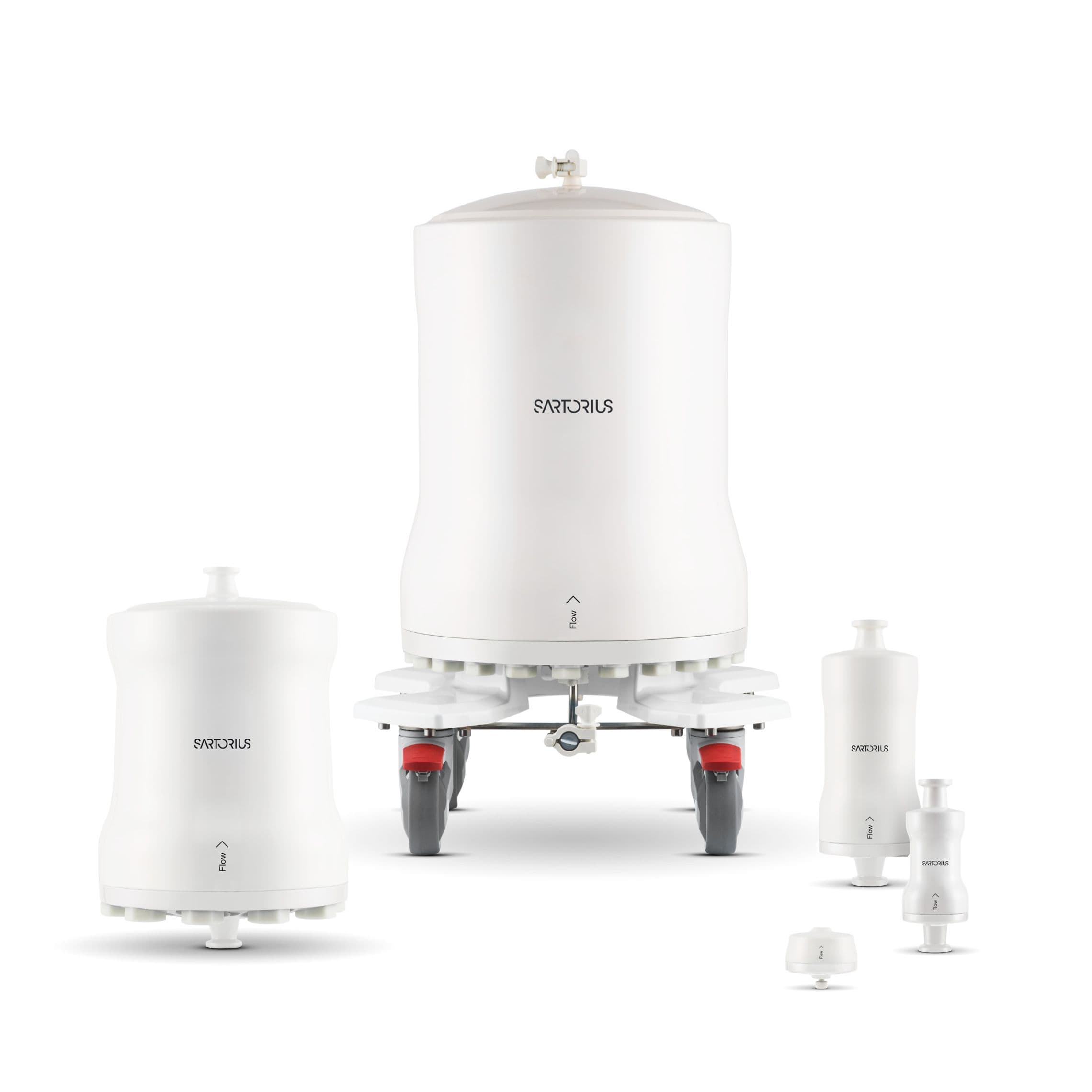
CIMmultus SO3 is the monolithic strong cation-exchange leader for high-flow applications, optimized for high-capacity capture of positively charged biomolecules at production scale with low pressure drop and broad chemical stability. Relative to the QA and DEAE CIMmultus variants it serves complementary separations for cationic targets, and compared with silica-based monoliths it typically offers greater chemical robustness and easier scale-up, which cuts development risk. These technical strengths yield financial advantages through higher throughput per column and reduced downtime in continuous or semi-continuous processing setups.
Where to buy CIMmultus SO3 Monolithic Column in Canada: the trusted retailers we track in this market, with the best price we have observed at each. Prices are checked regularly and can change, and the retailer confirms the final price at checkout.
We may earn a commission on purchases. It never affects our rankings.
$3,000 – $8,000
CIMmultus DEAE Monolithic Column
CIMmultus DEAE is the weak anion-exchange monolithic option tailored for high-flow processing where gentler, pH-sensitive separations are required; its polymeric monolith provides low backpressure and predictable scale-up behavior. Against the QA (strong anion) and SO3 (strong cation) products it fills the niche for milder binding/elution profiles while retaining the same high-flow, high-capacity architecture that reduces buffer volumes and cycle times. For process developers this often means lower formulation risk and lower lifecycle costs when shifting from analytical methods to pilot or production runs.
Where to buy CIMmultus DEAE Monolithic Column in Canada: the trusted retailers we track in this market, with the best price we have observed at each. Prices are checked regularly and can change, and the retailer confirms the final price at checkout.
We may earn a commission on purchases. It never affects our rankings.
$2,500 – $6,000
Chromolith IonExchanger Column
Chromolith IonExchanger columns are silica-based monolithic ion-exchange products widely recognized for very fast, high-resolution separations at analytical and preparative HPLC scales, making them a market leader where speed and chromatographic efficiency are the primary goals. Compared with the polymer CIMmultus family, Chromolith typically offers superior plate heights and sharper peaks for method development, but its silica chemistry and scale limits make it less straightforward for direct scale-up to high-flow production; this tradeoff means lower upfront cost for analytical labs but higher scale-up risk for manufacturing. Technically, Chromolith is often chosen for rapid screening and fine-resolution separations before process translation to polymeric monoliths for high-throughput production.
CIMac SO3 Analytical Column
CIMac SO3 is the analytical-scale version of the CIMmultus SO3 strong cation-exchange monolith, designed for method development and QC with identical chemistry and retention behavior to the larger CIMmultus production columns, enabling direct scale translation. In comparison to Chromolith analytical products, CIMac SO3 offers polymer-based chemical stability and a clearer pathway to scale-up into high-flow CIMmultus production units, reducing risk when moving from analytical methods to manufacturing. That direct compatibility shortens development timelines and lowers the effective cost of process transfer for organizations planning high-flow ion-exchange processes.

Why Research Supports Monolithic Ion Exchange Columns
Peer-reviewed work and industrial studies consistently highlight monolithic columns for their convective mass transfer mechanism, which reduces dependence on pore diffusion and maintains resolution at higher linear velocities. For scientists and process engineers new to the technology, the main idea is simple: the continuous porous structure lets fluid move through channels rather than having solutes rely on slow diffusion into tiny pores. That leads to faster separations, lower backpressure, and better throughput without sacrificing binding capacity or yield when used appropriately. Evidence from academic and industrial reports shows advantages in productivity, cleaner scale-up paths from analytical to preparative and process scales, and strong performance for charged molecule separations.
Convective flow through a continuous monolith reduces diffusion limitations and preserves resolution at high flow rates.
Studies report improved productivity and reduced cycle time for process-scale ion exchange using monoliths versus conventional bead resins when high throughput is required.
Monoliths often show lower pressure drop for a given flow rate, enabling larger column diameters or higher volumetric flow without exceeding system limits.
Analytical and preparative results translate more directly to process scale, easing validation and scale-up in regulated environments.
Frequently Asked Questions
Which CIMmultus monolithic column for high-flow anion capture?
Choose CIMmultus QA Monolithic Column if you need strong anion-exchange for high-throughput process chromatography with very low backpressure and high dynamic binding capacity; it also targets scale-up friendly repeated CIP and large load volumes (4.6 average rating).
What spec does CIMmultus SO3 provide for fast cation capture?
CIMmultus SO3 is a sulfonate-based strong cation-exchange monolithic column engineered for very high flow rates with minimal pressure drop and high dynamic binding capacity, optimized for capturing positively charged biomolecules at production scale; it earns a 4.5 average rating.
Is CIMmultus QA worth it versus CIMmultus SO3 for throughput?
Price and direct value comparison aren’t provided for CIMmultus QA Monolithic Column or CIMmultus SO3 Monolithic Column in the data, but QA targets strong anion exchange at very low backpressure (4.6) while SO3 targets strong cation capture with minimal pressure drop (4.5).
Does CIMmultus DEAE suit pH-sensitive, gentle separations?
Yes—CIMmultus DEAE Monolithic Column is a weak anion-exchange option with polymeric monolith low backpressure, tailored for gentler, pH-sensitive separations at high linear velocities; it’s positioned as scalable from lab to process (4.4 average rating).
Conclusion
In the Canadian market for 2026, the leading monolithic ion exchange columns combine speed, robustness, and practical scale-up for high flow workflows. The top options include CIMmultus QA Monolithic Column, CIMmultus SO3 Monolithic Column, CIMmultus DEAE Monolithic Column, Chromolith IonExchanger Column, and CIMac SO3 Analytical Column. For most high flow process applications the CIMmultus QA Monolithic Column stands out as the best overall choice thanks to its balance of capacity, throughput, and process-scale availability. We hope you found what you were looking for; you can refine or expand your search using the site search to focus on binding chemistry, column dimensions, or supplier support available in Canada.