Top 8 Industrial Automated Material Handling Systems in Canada for 2026
Published on Saturday, January 24, 2026
Industrial automated material handling systems bring together ASRS, automated guided vehicles, autonomous mobile robots, robotic picking, and conveyor sortation into unified warehouse control and execution environments. In Canada for 2026, these solutions are defined by AI-driven optimization, cloud connectivity, scalability for seasonal peaks, and seamless interoperability with warehouse management, transportation management, and ERP systems. Canadian buyers favor systems that deliver measurable throughput and accuracy gains, reliable local service and support, cybersecurity and data sovereignty considerations, and the flexibility to scale across multiple sites and temperature zones. Adoption is strongest in e-commerce, retail distribution, cold chain logistics, manufacturing, and third-party logistics, where labor constraints and demand volatility make automation a clear competitive lever. The category appeals to operators who need predictable performance, rapid return on investment, and technology partners that can integrate automation into existing software ecosystems while complying with Canadian safety and environmental standards.
Top Picks Summary
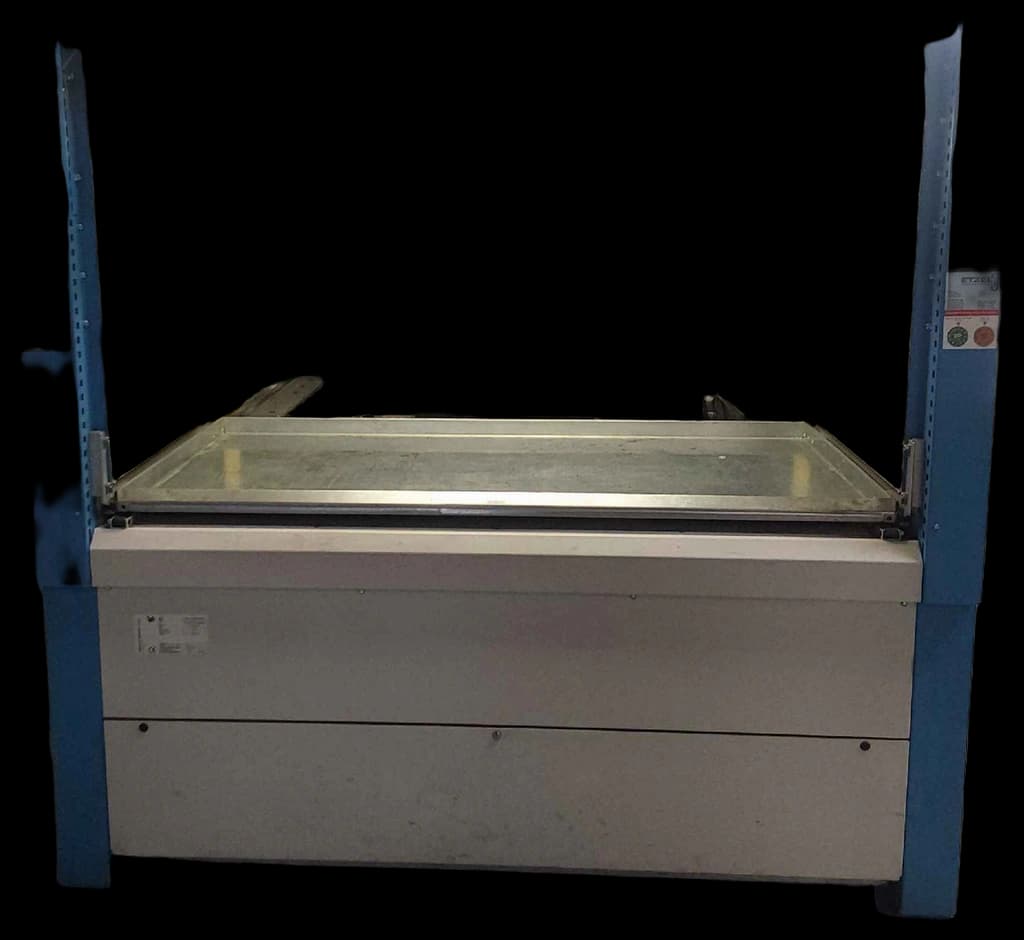
Kardex Shuttle XP is a high-precision, small-parts shuttle rack designed for ultra-compact ASRS applications and fast picking cycles, offering exceptional throughput per square meter for order-picking and e-commerce flows. Its leadership comes from delivering best-in-class pick density and cycle speed while minimizing footprint and labor costs; compared with the pallet-focused entrants on this list, the Shuttle XP is technically tailored to tray- and carton-level handling and yields superior SKU-level performance for SKU-dense operations. The Shuttle XP is commercially released and available for purchase.
$250,000-2,500,000 CAD
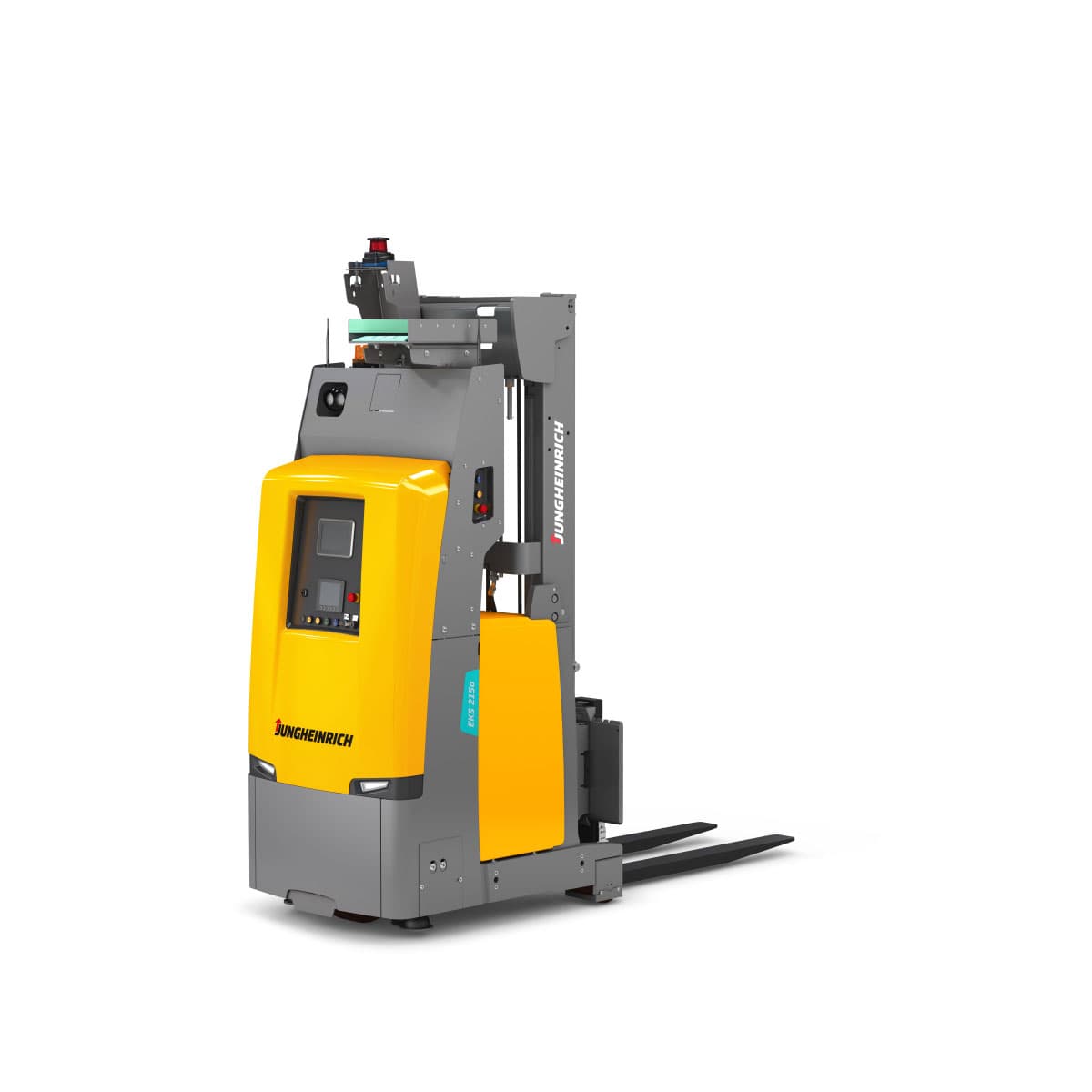
The Jungheinrich EKS 215a is recognized for narrow-aisle and high-density warehouse automation, offering compact automated reach-truck capability that maximizes throughput per square meter and reduces storage footprint. In comparison to larger tow or truck-style AGVs, the EKS 215a delivers a technically efficient option for operations prioritizing aisle utilization and energy efficiency, making it an attractive financial choice where space is the limiting resource.
$50,000-95,000 CAD
Locus Robotics' LocusBot is a market-leading fulfillment AMR optimized for high-throughput, multi-robot warehouse picking and cloud-native fleet orchestration. Its proven pick rates and software-centric approach deliver compelling per-order ROI and scalability compared with smaller collaborative units like 6 River's Chuck, while avoiding the higher single-vehicle capex of heavy haulers such as OTTO 1500 or Fetch Freight500.

$45,000-90,000 CAD
Universal Robots UR10e Cobot Workcell
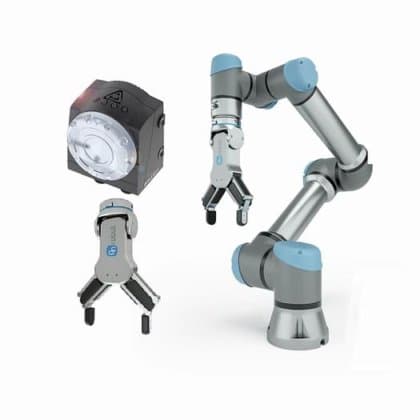
The UR10e Cobot Workcell from Universal Robots is a best-in-class choice for collaborative picking and packing workcells thanks to its intuitive programming, broad accessory ecosystem, and low integration cost that accelerates ROI for small-to-medium operations. Compared with heavier industrial cells in this list it offers faster deployment and lower capital expense, trading absolute peak throughput for flexibility and safe human-robot collaboration.
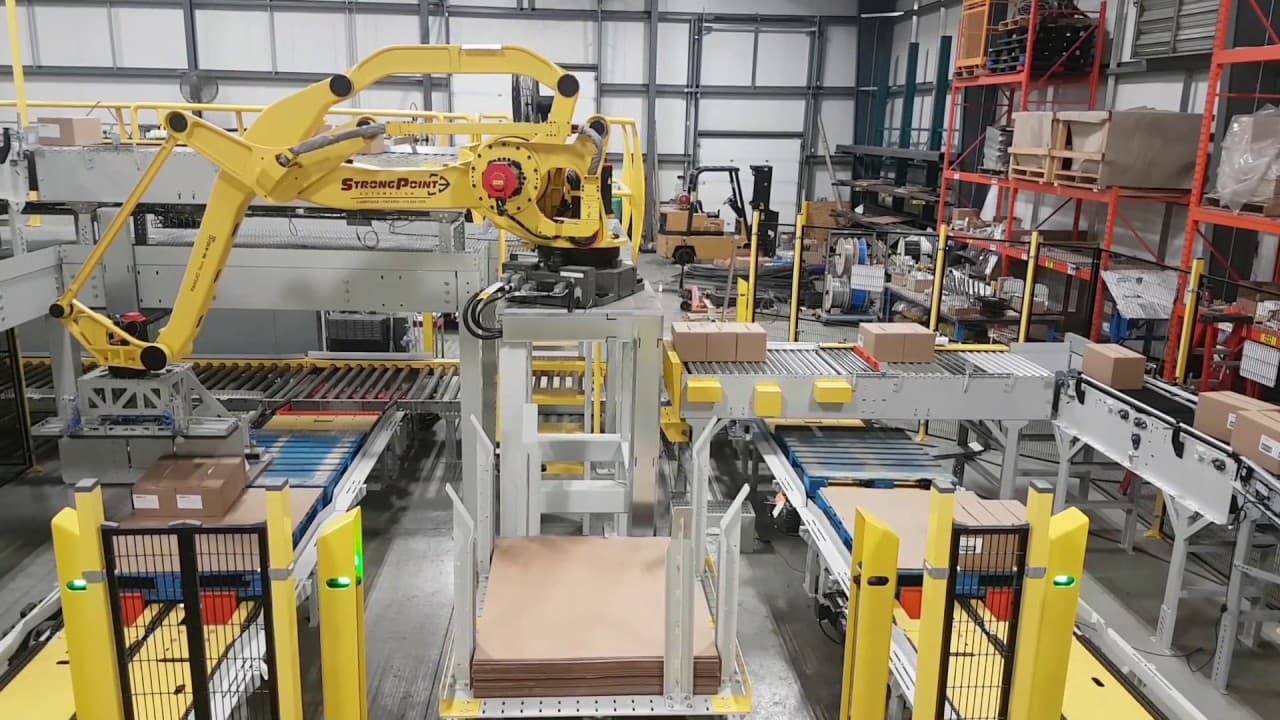
The FANUC M-410iC Palletizing Robot System is best-in-class for high-throughput, heavy-case handling thanks to its industrial-grade speed, reach and payload capabilities, which reduce cycle times and floor space per pallet. Compared with cobot and lighter-payload alternatives in this list it delivers a lower cost-per-case in high-volume lines and a proven uptime advantage versus turnkey case packers that require more bespoke integration. Its technical robustness and long service life make it a preferred capital investment when maximizing throughput and minimizing downtime are primary financial objectives.
Tecsys Elite WMS is a best-in-class choice for specialty distribution and healthcare that emphasizes traceability, ease of deployment and strong out-of-the-box functionality for mid-market and sector-specific operations. Compared with heavy-automation-focused vendors (Honeywell, Dematic, Körber), Tecsys offers a more cost-effective footprint and faster ROI for organizations that need rigorous inventory control and compliance but less direct equipment-level control, and it integrates readily with leading WCS vendors when automation is added later.

$75,000-$800,000 CAD
The Zebra DS3678-SR is a market-leading rugged cordless 1D/2D scanner that balances enterprise-grade durability with broad applicability across warehousing and distribution. Compared to the premium image-focused Cognex and the industrially hardened Granit models, the DS3678-SR offers a cost-effective mix of cordless freedom, long battery life, and proven durability that makes it a popular choice for large deployments where total cost of ownership and user mobility are priorities. Its financial advantage is lower per-unit cost and simpler integration for organizations already standardizing on Zebra peripherals and mobility platforms.

BlackBerry IVY is a unique entry focused on OEM-grade in-vehicle data standardization and secure edge processing, enabling automakers and fleet operators to monetize vehicle data while preserving privacy and security. Unlike the cloud-first fleet systems here, IVY’s edge-centric architecture reduces bandwidth and latency costs and simplifies integration with vehicle OEM systems, making it ideal for fleets and manufacturers looking to embed AI services directly into vehicles. Its security pedigree and OEM partnerships translate into long-term technical advantages for fleets investing in next‑generation connected-vehicle ecosystems.
What Research and Industry Reports Say About Automated Material Handling
Academic research, industry analyses, and government-funded studies consistently show that integrated automated material handling systems improve throughput, reduce errors, lower labor costs, and enhance workplace safety when deployed with appropriate change management. Evidence comes from logistics case studies, pilot deployments in manufacturing and distribution centers, and comparative analyses of manual versus automated operations. These sources also emphasize the importance of systems integration, continuous monitoring, and AI-driven controls to sustain gains over time.
Performance improvements: Multiple industry reports and pilot studies show significant increases in throughput and order fulfillment rates after deploying ASRS, AMRs, or robotic picking, with results varying by application and design.
Accuracy and error reduction: Research and operational case studies document a substantial drop in picking and sorting errors when automated systems replace or augment manual processes.
Labor and safety benefits: Studies report lower physical strain on workers and fewer workplace incidents when automation handles repetitive, heavy, or hazardous tasks, allowing staff to focus on exception handling and value-add roles.
Scalability and peak handling: Simulation studies and field tests demonstrate that cloud-connected control systems and AI optimization improve system responsiveness during peak demand, enabling better use of floor space and equipment.
Integration matters: Academic and practitioner literature emphasizes that interoperability with WMS, TMS, and ERP is a key predictor of long-term success; isolated automation islands deliver less value than fully integrated solutions.
Energy and sustainability: Recent analyses highlight energy-efficient designs and software-level optimizations that reduce power use and support corporate sustainability targets, a growing priority for Canadian operators.
Frequently Asked Questions
Which one should I buy for heavy loads?
Choose OTTO 1500 if you’re moving heavy loads with autonomous tug capabilities; it has an average rating of 4.7 and uses LiDAR-based navigation plus OTTO Fleet Manager for multi-vehicle coordination.
What specific picking speed feature does ABB FlexPicker IRB 360?
ABB FlexPicker IRB 360 uses delta-style robot kinematics designed for very high cycle rates, making it ideal for small-part picking and sorting, with an average rating of 4.7.
How does price compare across Kardex Mlog and OTTO 1500?
The provided data doesn’t include any prices for Kardex Mlog Pallet Stacker Crane or OTTO 1500, but it does list average ratings of 4.2 and 4.7 respectively.
Do I get integration and monitoring on Kardex Mlog crane?
Yes—Kardex Mlog Pallet Stacker Crane includes a Kardex control suite for easy integration, real-time monitoring, and simplified maintenance, and its average rating is 4.2.
Conclusion
Automated material handling systems are a strategic investment for Canadian operations focused on speed, accuracy, resilience, and sustainable growth. We hope this overview helps you understand the core benefits and considerations as you evaluate solutions in 2026. If you did not find exactly what you were looking for, use the search to refine by application, industry, region, or technology type, or expand your search to compare vendors, deployment models, and financing options.